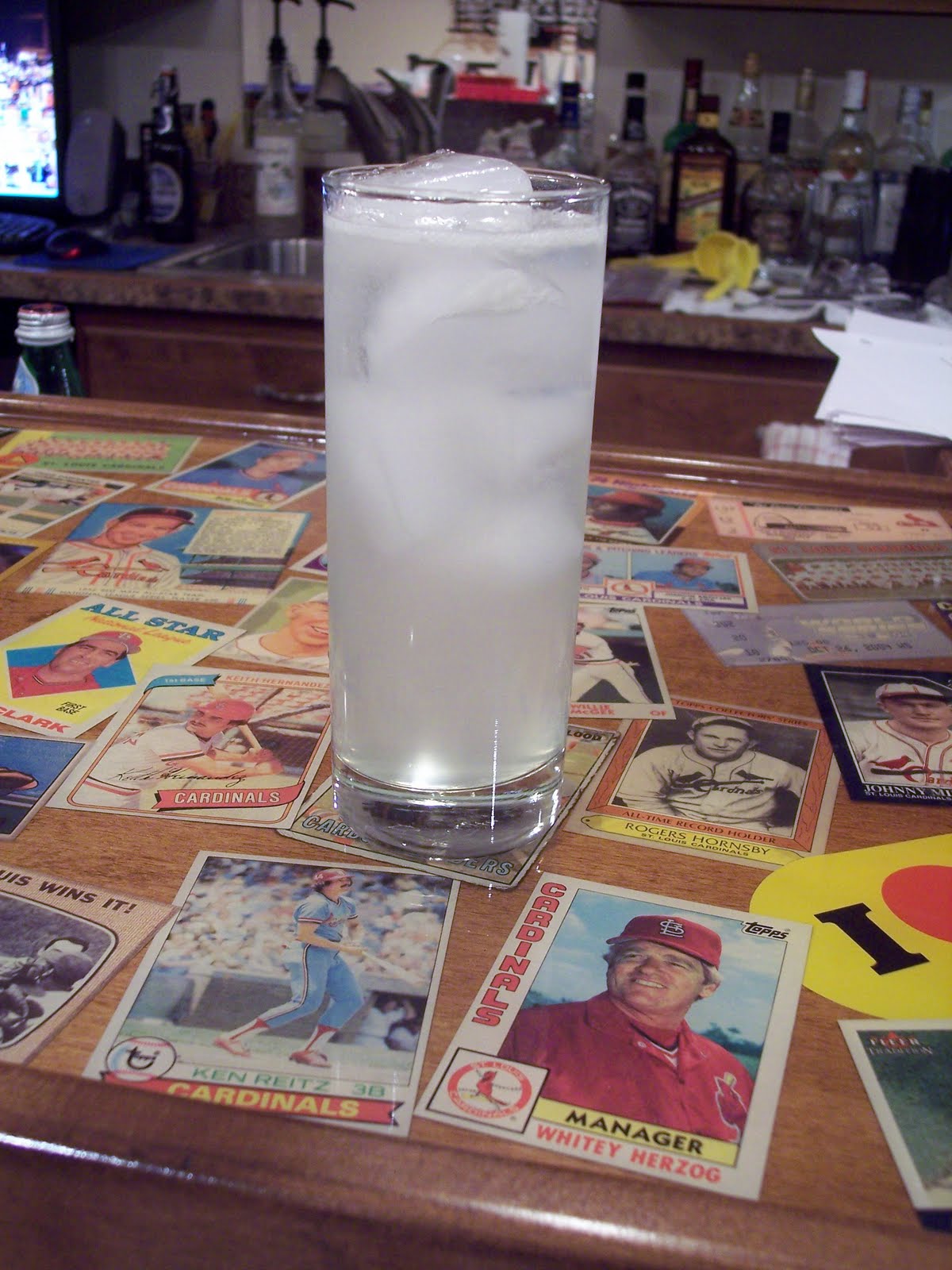
Sunday, December 12

Alexander Cocktail No. 2


Alexander Cocktail No. 2:
  • 1 oz. Brandy
  • 1 oz. Cream
  • 1 oz. Creme de Cacao
Shake and strain into 4 oz. Cocktail glass.

Here's why the Brandy Alexander is the most famous member of this family. Something about the combination of Brandy (which is a wine derivative) and Chocolate works pretty well. Certainly much better than Gin, in my opinion.

I think this is one of few cocktails that almost every source gets correct, which isn't really all that surprising, given the simple 1-1-1 ratio. For all that though, I'm either not a huge fan of chocolate in alcohol, or I'm not a huge fan of the product that I'm using (Marie Brizard's White Cacao Liqueur). I can't honestly say I've got a lot of experience with Chocolate drinks, and this is most certainly a dessert drink, given both the texture imparted upon it with the creme and, well, the presence of the chocolate. It's good and iconic for a reason, just probably not one of my personal faves.

Thursday, December 9

Alexander Cocktail No. 1


I'm sure we're going to get into a few of these, but this is the first in a drink family that has spawned drinks such as the Grasshopper and the Capri. I'm not sure if it has a name more profound than the "Alexander" family though, because that seems to be the standard. But before we get to the standard, we get this interesting concoction.

Alexander Cocktail No. 1:
  • 1 oz. Gin
  • 1 oz. Creme de Cacao
  • 1 oz. Cream
Shake well and strain into 4 oz. Cocktail glass.

I say interesting because I've never heard of any sort of "Gin" Alexander. This drink family is known for being very creamy, almost a dessert-cocktail family, mostly due to the presence of the cream, but gin is a new one. The Brandy Alexander is the standard, following which, this one seems just...interesting.

I will say this though, it almost doesn't matter. The botanicals of the gin are so far in the background that it almost might as well not even be there. Not balanced in that respect.

And the book calls for "1 oz. Sweet Cream" which puzzled the hell out of me until I did a quick Google search. Apparently, it's sweet cream as opposed to sour cream. Or, just "cream", by today's vernacular. I chose a standard cream (30% milkfat, to be precise), rather than heavy whipping cream (40%), simply because I didn't see the need, and it still provided a nice, smooth texture. Cream is a really interesting ingredient that I can't usually get behind, and I feel like for me, I needs to be very dessert-like for that consistency to make sense to my palate, which means it should also be way sweeter. An interesting cocktail, but probably not the best in the family.

Wednesday, December 8

Albemarle Fizz


Okay, second chance.

Abelmarle Fizz:
  • 2 oz. Gin (Seagrams)
  • Juice of 1/2 a lemon (3/4 oz.)
  • 1 tsp. Sugar
Shake well and strain into 7 oz. Highball glass, and then top with club soda. Add 1 tsp. raspberry syrup.

I did it correctly this time. No ice in the glass, just chilled club soda to top. And I gotta say, I like it. The large increase in the amount of the club soda really increased the fizzy-ness and gave the drink a delightful texture. The bit of raspberry syrup (which is, in a nutshell, a few raspberries muddled in some simple syrup) added a bit of flavor and actually kept the drink fizzy. Of course, it sank immediately to the bottom and didn't incorporate into the drink, which may or may not have been due to the density of the syrup I was using, but whenever you do something like this, adding the syrup last, it's going to do that. But just by virtue of the drink being full of club soda, and the syrup making its way down to the bottom, there was a hint of raspberries imparted to the drink that was nice.

Audrey Assad

Okay, I figured I should put something music-related up here so that you don't think I've been doing nothing but drowning in booze for the last week. This probably would have been a lot more cutting-edge and "it's okay, I knew about her when she was indie" if I'd come out with this before she started making it to the main-stream of Christian music, but I did see her very recently. Kind of.

She came to one of my churches (I have so many...but this one was the one where I actually figured out that God likes me, specifically, rather than God likes me, in general. It's where I went to youth group, and I've still got so many ties and friends in that place.) and played a show with some chick named...Kerrie Roberts. Who has some pipes. But I digress. I Saw like four seconds of Audrey, and she still blew me away.

If you've figured anything about me, it's probably that I like artists who can be real with me. When they're singing or playing or leading worship, I know that they're actually worshiping. Karl had a really good post on this just recently. Point is, that's the vibe I got from Audrey. And I know how hard it is to worship, night in and night out, with an ever-changing group of people, on the road. And that's why I was so impressed. Here's her big song, called Restless.


Alaska Cocktail

Chartreuse is one of those great cocktail ingredients that has survived the ages and is a crucial ingredient in a lot of classic cocktails. I didn't own any before undertaking this project though, so this will be, for all intents and purposes, my introduction to Chartreuse. And it's a doozy.

Alaska Cocktail:
  • 1 1/2 oz. gin (Seagram's)
  • 3/4 oz. Yellow Chartreuse
  • 2 dashes Orange bitters
Stir and strain into 3 oz. Cocktail glass

Let me just say that 3/4 of and ounce is quite a lot. This cocktail is essentially a Martini with Chartreuse (an extremely potent, herbal liqueur) in place of the vermouth. It makes some sense, since both can be enjoyed on the rocks as an aperitif, but, well...Chartreuse is rather intense. Some of my friends tell me that they like to do a shot of it at a nice bar. That seems a bit crazy to me.

We'll see if this ingredient grows on me. This cocktail was just so far away from what I was expecting that I couldn't enjoy it. Super intense, and super herbal.

Monday, December 6

Alabama Fizz


Well, it figures. The first drink in the book that calls for a garnish and I can't deliver. Stupid winter months.

Alabama Fizz:
  • 2 oz. Gin
  • Juice of 1/2 a lemon (about 3/4 oz.)
  • 1 tsp. sugar (2 tsp. simple syrup)
Shake and strain into 7 oz. highball glass. Top with club soda and garnish with two sprigs of mint.

There's a lot to like about this recipe. For one, it's really unfortunate that I don't have mint just lying around right now; one of the long-term plans is to get some kind of indoor herb garden with good mint, almost exclusively so that I can have cheap drink-making materials year-round. Or I suppose I could just move to San Diego. But the point is, fresh mint adds a lot to a cocktail, even if it's just in the nose. It would certainly add an interesting dynamic to what is essentially just a Tom Collins otherwise.

Also important: the specification of the size of the glass. The neat thing about this book is that it's really precise about what glassware to use. The shape isn't nearly so important as the size. When you're talking about putting a drink into a cocktail glass, in most cases it's mostly academic or a matter of presentation. When you're talking about a drink that gets topped off with something though (club soda, tonic water, ice, ginger ale, vodka...), size is extremely important. The difference between a 7 ounce Highball glass and a 12 ounce Collins glass is, get this, 5 extra ounces of club soda. That's the difference between a potent, flavorful cocktail and a light, refreshing one.

One final interesting note, as this is the first drink I've used that hasn't been put into a Cocktail glass. The actual wording of the recipe for this drink is "Shake well with cracked ice and strain into 7 oz. Highball glass. Fill with carbonated water. Add two sprigs of fresh mint." What you will notice about that is that it doesn't mention ice. I thought that was a whimsical missing piece, because of course you need ice in this drink, but then I thought about it and paged through the book to find some drinks that absolutely should have ice in them, and they did. In far smaller proportions than I'm used to. So, in actuality, no ice in this drink. which means that you get about 4 1/2 to 5 ounces of drink after the shake, and top the remaining 2 or so ounces with (chilled) club soda.

That's completely foreign to the modern American palate, where I've been trained to fill a glass to overflowing with ice and then add the drink, melting the ice as you go. What I need to decide is how closely I'm going to follow the book in this case. One the one hand, it's a very small difference (in this case) as the ice is going to be water eventually anyway, albeit less fizzy than club soda. On the other hand, the drink wouldn't dilute in the least if there were no ice in it, which has both positives and negatives. There is the option of just adding half of the ice that I normally would, which would seem like a fair compromise, except that there's a good, physics-based reason as to why I've been trained to consistently fill the glass with ice: The more ice, the less ice will melt and the more consistent the temperature (and dilution) of the drink from first sip to last.

I realize as I type that this seems to be a completely ridiculous detail. I likely wouldn't even be discussing it if it weren't for the fact that Old Mr. Boston was ridiculous specific on what he wants; the Gin and Tonic, for instance, requires one ice cube, whereas the Tom Collins asks for "several". I think that artistic integrity demands that I abide by the letter of the law, because I'm not adjusting any other cocktails for modern tastes, but if you'd choose to make this yourself, it would be legit to use a little ice. After all, it was good with ice. But don't miss the mint, if you can help it. I'm positive that that would add a lot of interesting depth. I'll have to try this one again in the summer.

Saturday, December 4

Alabama Cocktail


This drink is really interesting.

Alabama Cocktail:
  • 1/2 oz. Lemon juice
  • 1 tsp. (or two barspoons) simple syrup
  • 1 tsp. Orange curacao
  • 1 1/2 oz. Brandy
Shake well and strain into 3 oz. Cocktail glass.

The very first thought I had at looking at this drink was "Sidecar", perhaps the finest drink known to mankind. The reason why I had that thought was that all of the ingredients are the same. What's really interesting is that this thing tastes nothing like a Sidecar.

It might be obvious, but I think that these two drinks can teach you everything there is to know about what makes a good drink and what makes a terrible one, and the importance of being precise in your measurements. The Sidecar is delicious. This is...not. Again, not undrinkable, but I wouldn't ever consider this one "good". It's like a sour glass of brandy. It's harsh. Same ingredients, different ratio, completely different outcome. Where the Sidecar is balanced and terrific, this drink is a mess.

After Supper Cocktail


Supper? Dinner? For people my age and in this part of the country, there isn't a difference though I can appreciate that one means "lunch" and one means "dinner", and it's not the one you think. So perhaps this one would more correctly be called the "Dessert Cocktail?"

After Supper Cocktail:
  • 1 oz. Apricot brandy
  • 1 oz. Orange curacao
  • 1/2 oz. Lemon juice
Shake and strain into 3 oz. Cocktail glass.

So it's almost as if Old Mr. Boston himself heard my pleas for more lemon juice, and present us with a drink virtually identical to the one previous. Except with more lemon juice. As I suspected, that small change really brings a lot more balance to this drink. The result is that this drink is positively delightful. Still sweet, but like I said, balanced. This one's going on the list.

Thursday, December 2

After Dinner Cocktail


First cocktail with Apricot brandy. I'll just say this: it is very difficult to pin down that particular ingredient, or even any of the various fruit brandies. There's something called Eau de Vie which is, I believe, apple brandy, then there's a pear brandy and a peach brandy. Then, in order to find what is considered to be Apricot brandy, I had to go to an apricot liqueur which is nothing more than Cognac (which is brandy, just from the Cognac region of France) and apricots. The French are oddly specific.

After Dinner Cocktail:
  • 1 oz. Apricot brandy
  • 1 oz. orange Curacao
  • 1/2 tsp. Lemon juice
Shake well and strain into 3 oz. Cocktail glass.

As per usual with shaken drinks, I double-strained this concoction. To me, 1/2 of a teaspoon seems to be a very scant amount of lemon juice, which is evidenced in the still fairly clear complexion of the drink. I won't say it's unnoticeable, but I could have used more. The little bit does help cut the extreme sweetness of the drink slightly, though again, I could have used more balance. Perhaps a more fitting name would be the Dessert Cocktail with all of the sugar. Very sweet (though not undrinkably so, but some might disagree), and very delightfully fruity (I really like the way that the apricot and orange flavors play together), but probably not going to make my regular rotation.

Wednesday, December 1

Affinity Cocktail


So I know this looks really similar to everything else; I keep hoping to find the words "Garnish with...", but so far, nothing. But that's not really the end of the world, because I didn't really find this cocktail to be anything special.

Affinity Cocktail:
  • 3/4 oz. Scotch
  • 3/4 oz. Italian (sweet, red, whatever) vermouth
  • 3/4 oz. French (dry, white, etc.) vermouth
  • 2 dashes orange bitters
Stir with cracked ice and strain into 3 oz. Cocktail glass.

Scotch is hard to mix with because it has such an assertive, smoky flavor, but this isn't the way to do it, I don't think. Going 2:1 the opposite way with vermouths really does cover up the scotch, and the orange bitters makes things interesting at the end, but nothing shines here. It's very vermouth-y, which isn't really the end of the world (vermouth is delicious), but it didn't do much for me. I will say that, in most cocktails calling for scotch, you can save your money and just use a decent blend. No sense in pouring a $100 single-malt anywhere but into a highball with a little water or one huge ice cube.

What this cocktail does do is really illustrate what happens when you stir something vs. when you shake it: it comes out crystal clear. I'm not sure the picture really did it justice, but this drink did sparkle nicely.